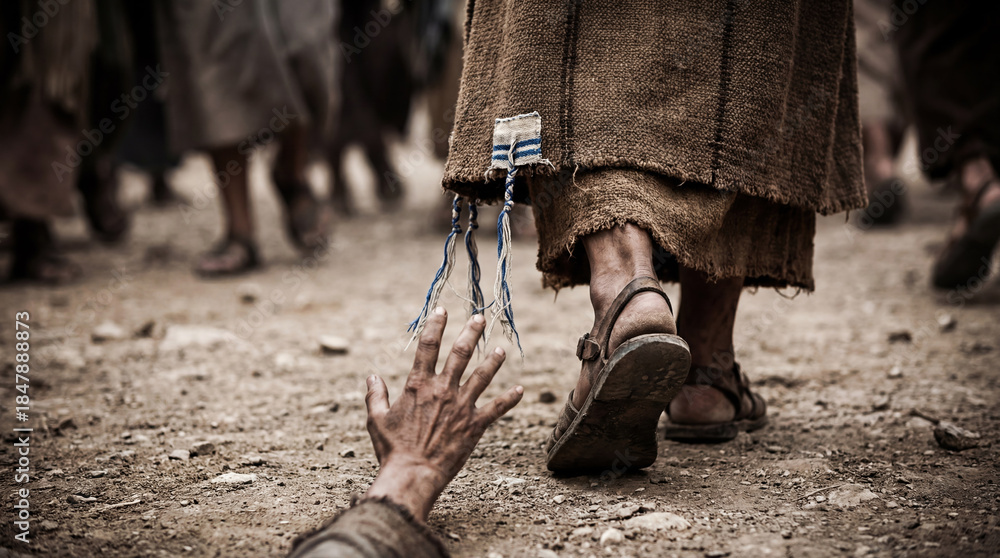
In the modern era, we often view the miracles of Jesus through a binary lens: they are either supernatural events to be accepted by faith or "pre-scientific" myths to be explained away. However, for a 1st-century scholar, a different question arises: How did Jesus’ contemporaries—both his followers and his critics—categorize his "mighty acts" in a world already populated by wonder-workers?
In my recent research, "The Sign and the Wonder," I explore the historical and literary landscape of the ancient Mediterranean to locate Jesus among his peers. By comparing the Gospel accounts with Greco-Roman "Divine Men" (Theios Aner) and Jewish "Devout Ones" (Hasidim), several striking distinctions emerge.
The Competition: Honi and Apollonius
To understand Jesus, we must look at figures like Honi the Circle-Drawer and Apollonius of Tyana.
The Jewish Hasid: Honi (1st c. BC) was a "virtuoso of prayer." When he ended a drought, it was through a persistent, almost stubborn, petition to God. His power was instrumental—he was a son pestering a Father.
The Greco-Roman Theios Aner: Apollonius (1st c. AD) was a philosophical sage. His miracles, such as raising a Roman maiden, often involved "secret spells" and whispered incantations. His power was technical—a byproduct of his own divine virtue.
The Jesus Distinction: Exousia over Incantation
When we apply the "criteria of authenticity" (such as Multiple Attestation and Embarrassment) to the Gospels, Jesus breaks these molds. Unlike Honi, Jesus rarely "prays" for a miracle in the moment; he commands. Unlike Apollonius, he avoids esoteric spells, using plain Aramaic commands like "Talitha koum" (Little girl, get up).
Scholars like John P. Meier and Graham Twelftree note that Jesus’ miracles were characterized by exousia (inherent authority). He didn't just provide relief; he performed "eschatological signs" intended to prove that the Kingdom of God had physically crashed into the present.
The "Sorcery" Defense: A Historical Anchor
Perhaps the most fascinating finding is the "Beelzebul Controversy." The fact that Jesus’ enemies accused him of working for the prince of demons (Mark 3) is a powerful historical anchor. This charge evolved into the later Rabbinic claim in the Babylonian Talmud that Jesus "practiced sorcery."
For the historian, these hostile accounts are gold. They prove that Jesus’ miracles were so public and undeniable that his detractors couldn't deny the acts—they could only seek to re-label the source.
Conclusion: More Than a Wonder-Worker
While Jesus "fit" the 1st-century milieu of the miracle-worker, he ultimately subverted it. His acts were not for show or for hire; they were restorative assaults on chaos. Whether stilling a storm or healing a leper, Jesus was performing a "New Creation" in the middle of the old one.
Suggested Further Reading:
Meier, John P. A Marginal Jew, Vol. 2 (1994).
Twelftree, Graham. Jesus the Miracle Worker (1999).
Schäfer, Peter. Jesus in the Talmud (2007).
In my recent research, "The Sign and the Wonder," I explore the historical and literary landscape of the ancient Mediterranean to locate Jesus among his peers. By comparing the Gospel accounts with Greco-Roman "Divine Men" (Theios Aner) and Jewish "Devout Ones" (Hasidim), several striking distinctions emerge.
The Competition: Honi and Apollonius
To understand Jesus, we must look at figures like Honi the Circle-Drawer and Apollonius of Tyana.
The Jewish Hasid: Honi (1st c. BC) was a "virtuoso of prayer." When he ended a drought, it was through a persistent, almost stubborn, petition to God. His power was instrumental—he was a son pestering a Father.
The Greco-Roman Theios Aner: Apollonius (1st c. AD) was a philosophical sage. His miracles, such as raising a Roman maiden, often involved "secret spells" and whispered incantations. His power was technical—a byproduct of his own divine virtue.
The Jesus Distinction: Exousia over Incantation
When we apply the "criteria of authenticity" (such as Multiple Attestation and Embarrassment) to the Gospels, Jesus breaks these molds. Unlike Honi, Jesus rarely "prays" for a miracle in the moment; he commands. Unlike Apollonius, he avoids esoteric spells, using plain Aramaic commands like "Talitha koum" (Little girl, get up).
Scholars like John P. Meier and Graham Twelftree note that Jesus’ miracles were characterized by exousia (inherent authority). He didn't just provide relief; he performed "eschatological signs" intended to prove that the Kingdom of God had physically crashed into the present.
The "Sorcery" Defense: A Historical Anchor
Perhaps the most fascinating finding is the "Beelzebul Controversy." The fact that Jesus’ enemies accused him of working for the prince of demons (Mark 3) is a powerful historical anchor. This charge evolved into the later Rabbinic claim in the Babylonian Talmud that Jesus "practiced sorcery."
For the historian, these hostile accounts are gold. They prove that Jesus’ miracles were so public and undeniable that his detractors couldn't deny the acts—they could only seek to re-label the source.
Conclusion: More Than a Wonder-Worker
While Jesus "fit" the 1st-century milieu of the miracle-worker, he ultimately subverted it. His acts were not for show or for hire; they were restorative assaults on chaos. Whether stilling a storm or healing a leper, Jesus was performing a "New Creation" in the middle of the old one.
Suggested Further Reading:
Meier, John P. A Marginal Jew, Vol. 2 (1994).
Twelftree, Graham. Jesus the Miracle Worker (1999).
Schäfer, Peter. Jesus in the Talmud (2007).